
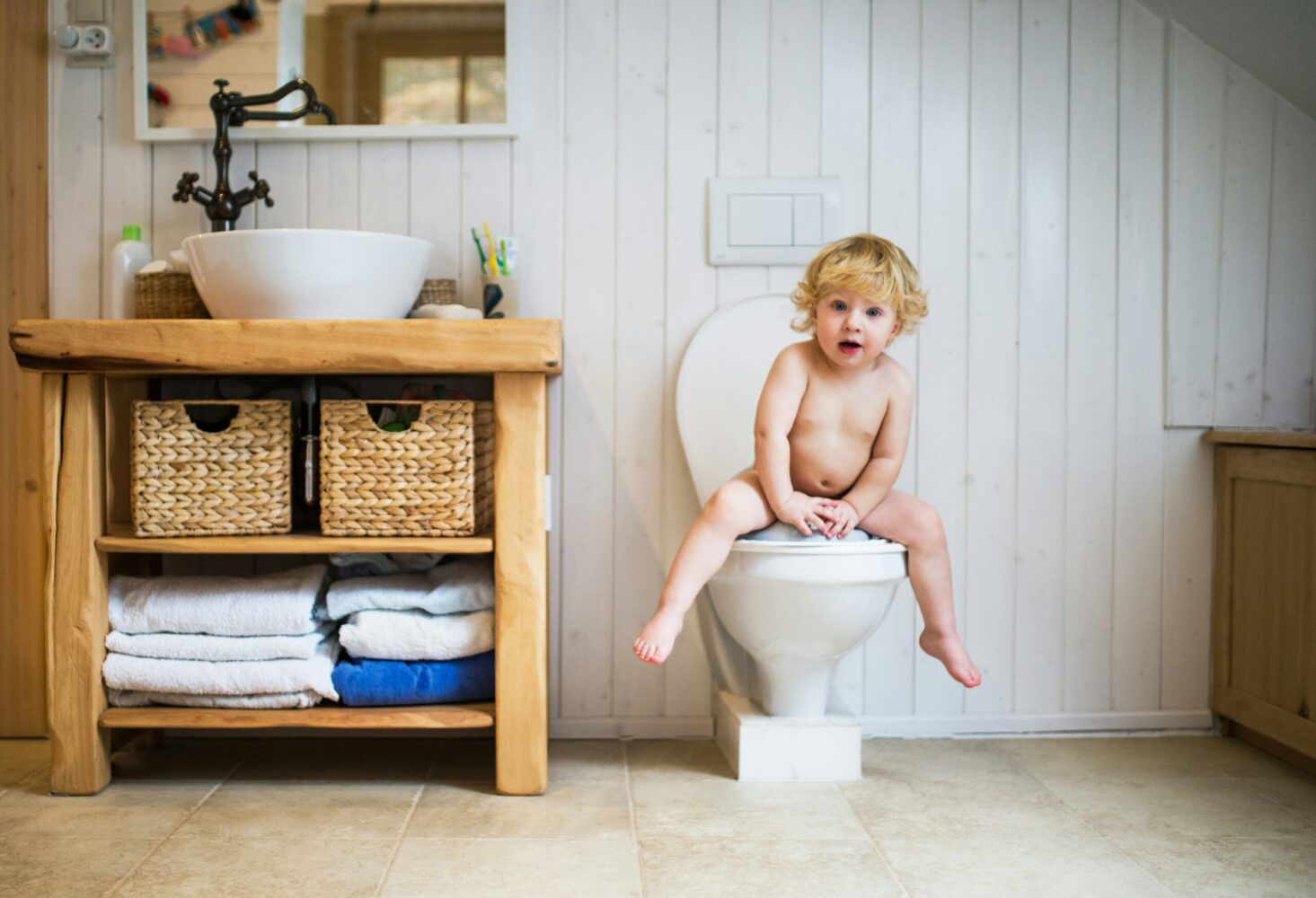
Many parents picture constipation as a child who has not had a bowel movement for several days. Sometimes it looks exactly like that. Often it does not. A child may pass small stools regularly while still holding a larger amount of stool inside.
Once a bowel movement hurts, a child may begin holding the next one. The longer stool remains in the colon, the more water is absorbed and the harder it becomes. That can create a loop: pain leads to holding, holding leads to harder stool, and harder stool leads to more pain.
Seven clues worth noticing
- The hiding dance. Tiptoes, stiff legs, crossed ankles, buttock clenching, rocking, or a sudden dancelike posture may be holding—not an attempt to push.
- Very large or painful stools. A child may go every day and still be constipated if the stool is hard, painful, or unusually large.
- Small smears or ‘diarrhea’ in the underwear. Liquid or soft stool can leak around a hard stool mass. This is often mistaken for diarrhea or defiance.
- Belly pain that comes and goes. Constipation commonly causes cramping, fullness, bloating, reduced appetite, or pain that improves after a bowel movement.
- New urine accidents. A stool-filled rectum can crowd or irritate the bladder, contributing to daytime wetting or bedwetting.
- Bathroom avoidance. Some children avoid school bathrooms, do not want to interrupt play, or fear another painful bowel movement.
- A toilet-clogging surprise after days of tiny stools. Frequent small bowel movements do not necessarily mean the colon is emptying well.
A gentle home reset
For mild, short-lived symptoms in an otherwise well child, make the bathroom routine calm and predictable:
- Offer fiber-rich foods such as fruit, vegetables, beans, and whole grains, along with adequate fluids.
- Invite a potty-trained child to sit for a few relaxed minutes after meals, when the body’s natural gastrocolic reflex is working in your favor.
- Use a footstool so the feet are supported and the knees can sit a little higher than the hips.
- Praise the routine, not the result. Shame, punishment, and repeated interrogation usually make holding worse.
Do not start an enema, laxative, or long clean-out plan without guidance from your child’s clinician. When constipation has been present for a while, effective treatment may require more than extra fruit and water, and stopping treatment too early can restart the cycle.
When to call
Arrange a pediatric visit when symptoms last more than two weeks, keep returning, cause significant pain, interfere with eating or school, or do not improve with basic home measures. Seek prompt medical assessment for blood in the stool or rectal bleeding, persistent abdominal swelling, constant abdominal pain, vomiting, weight loss, a very ill appearance, or any concern in a young infant.
Constipation is common, treatable, and nothing to be embarrassed about. Recognizing the holding pattern early can spare a child months of discomfort—and make the bathroom ordinary again, which is exactly what it should be. This information was reviewed, edited and approved by our Medical Director, Timothy D. Watson, MD, FAAP on 9/7/2026.
Sources
NIDDK, Symptoms & Causes of Constipation in Children: https://www.niddk.nih.gov/health-information/digestive-diseases/constipation-children/symptoms-causes
NIDDK, Treatment for Constipation in Children: https://www.niddk.nih.gov/health-information/digestive-diseases/constipation-children/treatment
ESPGHAN/NASPGHAN Clinical Guideline: https://naspghan.org/files/documents/pdfs/position-papers/Constipation_Feb_2014.pdf
Leave feedback about this
You must be logged in to post a comment.